Dr. John Rao discusses early Christianity and the Greco-Roman world including early heresies. Christ warned us that heresies would come. They were already alive in the First, Second and early...
Dr. William Marra presents C. S. Lewis, critic, author, and philosopher, as the perfect “General Practitioner” for the diseases of Skepticism and Relativism in the 20th century.
Mr. Christopher Ferrara, Esq., posits that the modernist perception of the right to religious liberty is an erroneous and harmful illusion. Catholic Tradition: Old Rites – New Rights: Phantom Right...
Dr. R. V. Young dispels pagan myths concerning the origins of the Gospel and explains how the Council of Trent fostered the promotion of genuine art in Catholic churches.
Visigothic Spain developed a rich Catholic culture from the 500’s through the early 700’s, which was important for the development of the whole Christian Medieval West. Dr. John Rao shows...
Christianization and Romanization required a deeper learning in the High Middle Ages. Dr. John Rao shows that this involved studies in theology, philosophy, and law in the period from 1000-1300...
Dr. John Rao tackles Leo XIII’s efforts to do two things simultaneously. One was to provide a more detailed, positive Catholic Social Theory opposed to the Enlightenment. A second was...
The Fourteenth Century proved to be disastrous in innumerable spiritual, intellectual, and political/social ways. This is is discussed in detail by Dr. John Rao. The Papacy moved to Avignon and...
Dr. John Rao discusses the so-called New Theology developed the modernist, vitalist, and personalist ideas that came from earlier in the century. Its concern to “dive into” and help fulfill...
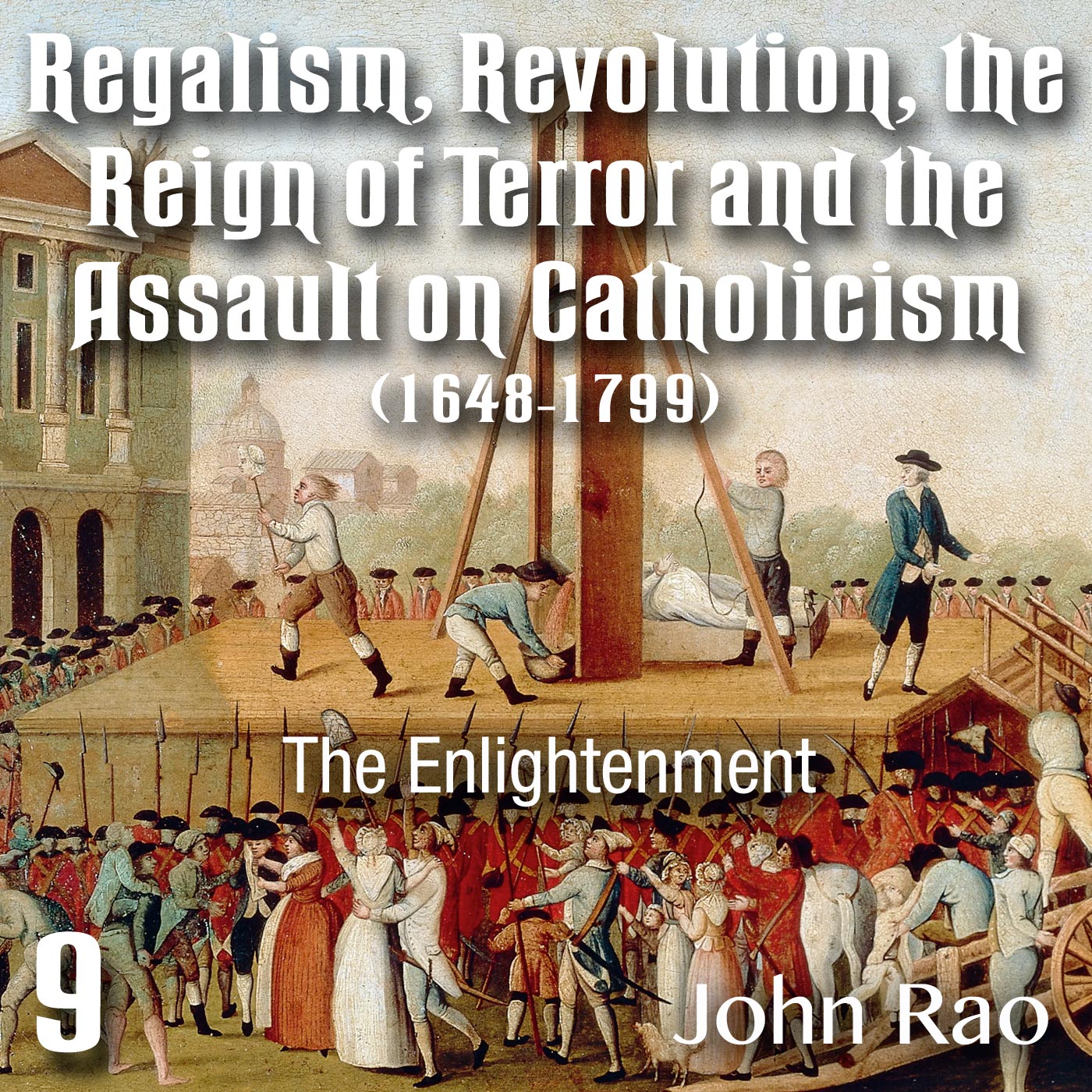
Dr. John Rao describes the “back to nature” movement called the Enlightenment. The “back to nature” movement called the Enlightenment is the final element that Dr. John Rao brings in...
Father Richard Munkelt shows that the Islamic world had a rich philosophical history in the Middle Ages, including thinkers who worked with theologians and Sufi mystics and others who posed...
Dr. John Rao describes the intellect of Pope Pius IX. In this lecture, Dr. Rao presents a most enlightening and scholarly portrait of Pius IX, the total demeanor of the...
Dr. John Rao discusses the reactions to Chalcedom and Monophysite Movement. This and the following two talks by Dr. John Rao cover the controversial Council of Chalcedon and reactions to...
David Hughes discusses the revival of traditional Church Music in the Post-French Revolutionary world and what it really entailed. He points out that the post French Revolutionary world saw a...
Dr. Harry Wu tells of religious persecution in China. He spent over a decade in a communist concentration camp for his anti-revolutionary writing. He tells the moving story of his...
Mr. Michael Davies shows how Pope Liberius gave in to political pressure in his talk. The great battle of Athanasius against the Arian and Arianizing Emperors brought tremendous political pressure...
Mr. Michael Davies discusses the Alexandrian and Gallican rites. Two distinct centers of liturgical importance are examined in this lecture by Mr. Michael Davies: those of Alexandria in Egypt, with...
What was the Roman School’s “program” in the years 1918-1939? Dr. John Rao illustrates how much this was connected with, on the one hand, Pius XI’s missionary concerns, and, on...
The term “The Black Legend” specifically describes a set of lies regarding Catholic Spain. Dr. John Rao speaks here of a broader “syllabus” of Black Legends, developed through the ages,...